Upaksham Ramteke / Shubham Gajbhiye…
Chief Executive Editor / Special Correspondent…
The results for the Navodaya Vidyalaya Entrance Examination have recently been declared, and the announcement has sparked an uproar following the revelation of a shocking irregularity: students from urban areas have usurped seats specifically reserved for students from rural areas.
Consequently, a grave issue has come to light, suggesting that discriminatory practices—driven by corruption—are being perpetrated even within the results of the Navodaya Vidyalaya Entrance Examination.
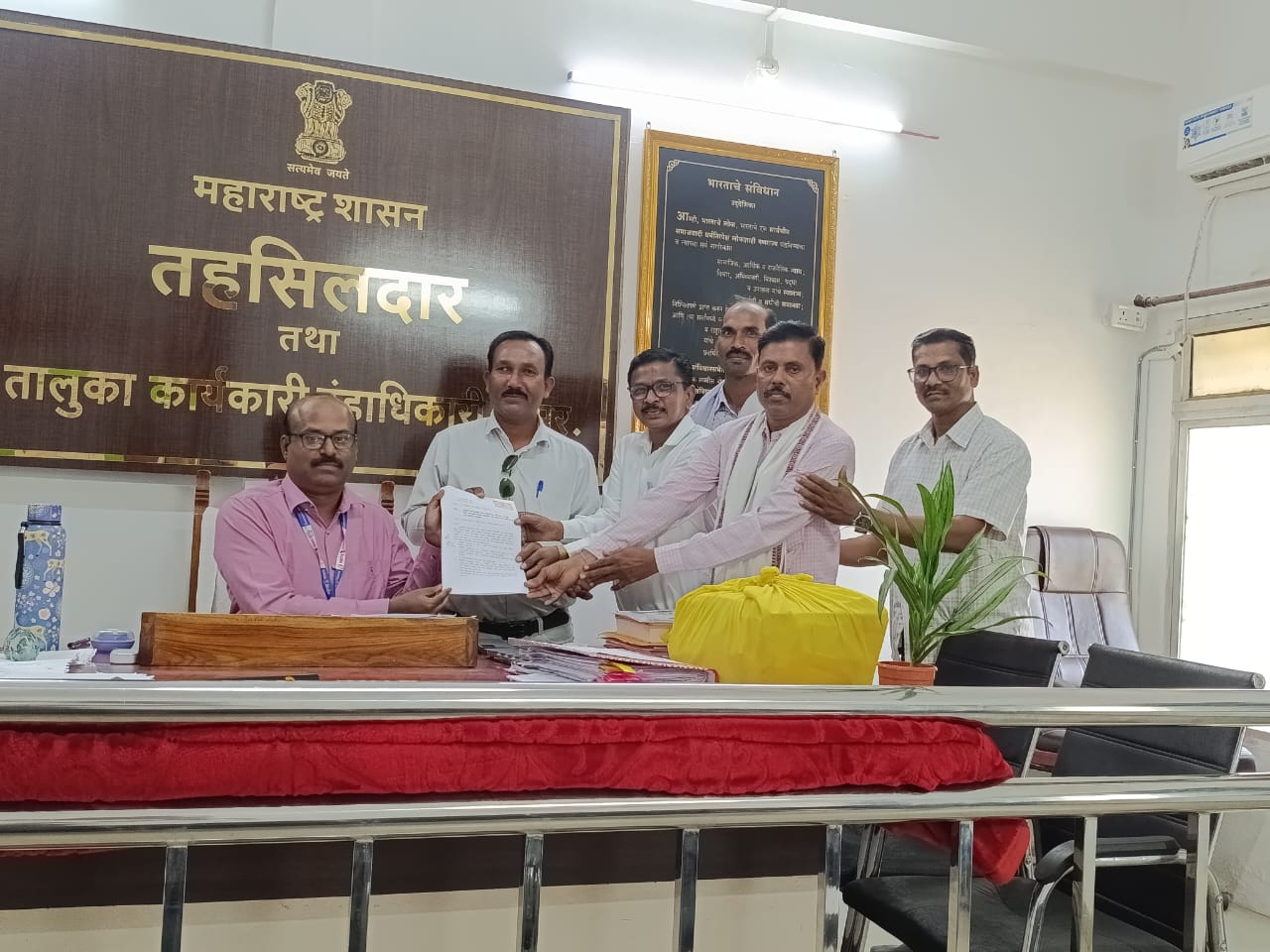
Regarding the recently published selection list for the Jawahar Navodaya Entrance Examination 2026—in which numerous urban students have encroached upon seats designated for rural areas—parents of the aggrieved students have submitted a memorandum demanding an inquiry into the matter. This memorandum was addressed to the District Collector of Chandrapur, the Tehsildars of Chimur and Sindewahi, and the Principal of Jawahar Navodaya Vidyalaya, Talodhi (Balapur), District Chandrapur.
The parents of the aggrieved beneficiary students from rural areas assert that the Jawahar Navodaya Vidyalaya was established with the specific objective of providing high-quality English-medium education to students from rural backgrounds; furthermore, according to the institution’s regulations, 75 percent of the available seats are required to be filled by students hailing from rural areas.
Additionally, it is stipulated that any student who has studied—or is currently studying—in classes 3, 4, and 5 at schools or convent schools situated within the jurisdictional limits of a Nagar Panchayat, Nagar Parishad, Municipality, or Municipal Corporation is officially classified as an “urban student.” Despite this, the following urban students have been selected under the ‘Rural’ category: 1) Nehal Mahesh Sakharkar (Serial No. 25 on the list), a student of St. Claret English Medium School, Chimur; 2) Yugalkishore Yogiraj Sahare (Serial No. 30 on the list)—who studied in Grades 3 and 4 at St. Claret English Medium School, Chimur, and in Grade 5 at Convent School, Brahmapuri; and 3) Devanshu Mangesh Kamdi (Serial No. 8 on the list), a student of Devyani International School, Sindewahi.
Furthermore, while a total of 19 students from Sindewahi Taluka appear on the list, numerous urban students—hailing from institutions located within the jurisdiction of the Sindewahi Nagar Panchayat/Nagar Parishad (Municipal Council), namely: 1) Devyani International School, Sindewahi; 2) Prajakta Vidya Mandir, Sindewahi; and 3) Kalpataru Vidya Mandir, Sindewahi—have been selected under the ‘Rural’ quota.
Consequently, based on these factual details, it becomes evident that a proper and immediate inquiry is imperative to ascertain exactly how many such students from the urban areas of Chandrapur District have availed themselves of seats designated for the rural category.
Given that students from urban areas already have access to every conceivable educational facility, if these students are misleading the government—thereby effectively depriving their rural counterparts of the opportunity to receive an education at the Navodaya Vidyalaya—then it must be concluded that a grave educational and social injustice is being inflicted upon the students of the rural regions. Consequently, while issuing ‘Rural Area Certificates’ to students across Chandrapur district, the concerned authorities are humbly requested—by young students acting through their parents—to verify the applicants’ Class 3, 4, and 5 mark sheets and other supporting evidence, as well as to confirm the specific geographical zone in which their respective schools are situated, before issuing such certificates. This measure aims to rectify the injustice currently being inflicted upon rural students.
Copies of this memorandum have been submitted to the Tehsildar (Chimur), the Tehsildar (Sindewahi), and the Principal of P.M. Shri Jawahar Navodaya Vidyalaya, Talodhi (Ba.), Chandrapur, for their information and for appropriate necessary action.
The memorandum bears the signatures of the parents of the following aggrieved students: Master Maitray Damodhar Ramteke (Jambhulghat, Tehsil Chimur), Master Shirsh Mangesh Chacharkar (R/o Post Neri, Tehsil Chimur), Miss Sachi Madanpal Yesambare (R/o Talodhi (Na.), Tehsil Chimur), Miss Tanuja Sunil Khate (R/o Talodhi (Na.), Tehsil Chimur), Miss Sayali Umdev Gajbhe (R/o Post Neri, Tehsil Chimur), and Master Mahendra Dhanraj Barsagade.
The parents of these aggrieved students earnestly hope that the District Collector of Chandrapur (Mr. Vinay Gowda), the Tehsildar of Chimur (Mr. Shridhar Rajmane), the Tehsildar of Sindewahi, and the Principal of P.M. Jawahar Navodaya Vidyalaya (Talodhi-Balapur) will adopt a just and equitable stance, thereby rectifying the injustice suffered by rural students in the context of the Jawahar Navodaya Vidyalaya entrance examination results.