
Pradeep Ramteke
Editor-in-Chief
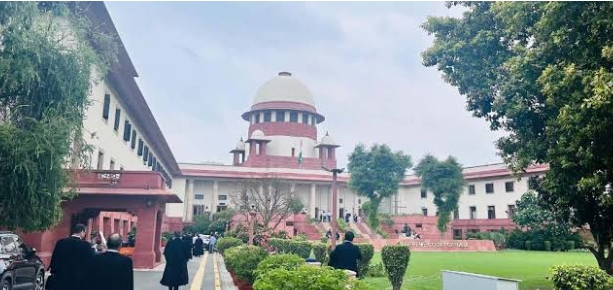
The Supreme Court of India is the highest judicial body under the Indian Constitution. Article 124 of the Constitution states that “There shall be a Supreme Court of India.” The Indian Constitution has given the Supreme Court of India supreme authority, due to which the Central Government cannot push the Chief Justice of the Supreme Court and other judges in the same way.
On the contrary, the Supreme Court can review the wrong laws made by the Central Government and the State Governments and repeal those laws and can provide the highest protection to the citizens by curbing the wrong practices of the Central and State Governments.
Along with this, the Supreme Court also reserves the right to give legal guidance to His Excellency the President from time to time.
The main functions of the Supreme Court of India are to protect the fundamental rights of the citizens, resolve disputes between the state and central governments and various government authorities, hear final appeals against the decisions of the High Courts and advise the President on constitutional matters.
Also, it can strike down any laws by the power of judicial review if they are found to be inconsistent with the Constitution.
The Supreme Court is the final appellate court in India for all civil and criminal cases, which means that you can appeal against the decisions of the High Courts to the Supreme Court.
Protection of Fundamental Rights…
The Supreme Court protects the fundamental rights of the citizens. If these rights are threatened, the citizens can directly appeal to the Supreme Court.
Disputes between the Centre and the States…
The Supreme Court resolves disputes that arise between the Central Government and the State Government, as well as between two or more State Governments.
Judicial Review…
The Supreme Court has the power of judicial review. Under this power, it can examine the constitutionality of any law or executive action and strike it down if it is found to be inconsistent with the Constitution.
Advisory Court…
The President of India can seek the advice of the Supreme Court on any matter of law referred to it under the Constitution or on a question of public importance.
Original Jurisdiction…
Certain cases, such as disputes between two states or disputes between the Centre and one or more states, can be brought directly before the Supreme Court from the outset.
The Supreme Court has original, appellate, advisory, revisional and extraordinary jurisdiction, through which it protects the fundamental rights of citizens, resolves disputes between the Centre and the states, interprets the law and is binding on the decisions of all courts. It can issue habeas corpus, mandamus and other writs, and can also punish those found in contempt of court.
The main powers of the Supreme Court are as follows….
Original Jurisdiction:
When a dispute arises between the Central Government and one or more states or between two or more states, these disputes go directly to the Supreme Court and it hears them as original cases.
Under Article 32 of the Constitution, it has jurisdiction for the enforcement of fundamental rights. It has the power to issue writs.
Appellate Jurisdiction:
The Supreme Court is the final appellate court in all civil and criminal cases in India.
It hears appeals filed against the decisions of the High Courts.
Advisory Jurisdiction:
The President has the power to advise on legal or factual issues of public importance under Article 143 of the Constitution.
Review Jurisdiction:
The Supreme Court has the power to review its own decisions. It can reconsider its decision or order if the court has been misled.
Extraordinary Jurisdiction:
As per Article 136 of the Constitution, the Supreme Court has the power to grant special appeals against any decision of any court or tribunal on any ground.
The Central Government and the Supreme Court are two distinct and important institutions in the Indian system of governance. The Central Government represents the executive and legislative branches, while the Supreme Court is the highest judicial body of the country, which interprets and enforces laws and constitutions. The Supreme Court checks whether the laws and actions of the government are within the framework of the Constitution.
Role of the Central Government The Central Government is established to make and enforce the laws of the country. It consists of the Executive (President, Prime Minister and Council of Ministers) and the Legislature (Parliament).
Role of the Supreme Court…
The Supreme Court of India is an autonomous judicial body under the Indian Constitution. This body has the power of judicial review, that is, it checks whether the laws and actions of the government are in accordance with the Constitution.
The Supreme Court is the highest constitutional court in the country, which decides cases related to the functioning of the central government and other institutions.
The central government makes laws in accordance with the Constitution, but the Supreme Court reviews those laws. If a law made by the central government is against the Constitution, the Supreme Court can declare it invalid.
The Supreme Court checks the functioning of the government and maintains the autonomy of the judiciary, which is very important for democracy. The Supreme Court was established under Article 124 of the Constitution of India, which provides for the establishment of a Supreme Court consisting of 34 judges, including the Chief Justice.
Other important articles related to the Supreme Court include Article 129 (Courts of Registration), Article 131 (Original Jurisdiction), Article 136 (Special Leave Petition), Article 137 (Power of Review), Article 141 (Binding Act) and Article 142 (Enforcement of Judicial Orders).
Article 124 Establishment and Constitution: This article provides for the existence of the Supreme Court of India.Number of Judges: It provides for 34 judges including the Chief Justice.
Other important…
Article 129: Describes the Supreme Court as a court of record, meaning that its decisions are binding records of law and include the power to punish for contempt.
Article 131:- Defines the original jurisdiction of the Supreme Court, which allows disputes between the Centre and the States or between different States to be brought directly before it.
Article 136:- Empowers the Supreme Court to decide special leave petitions against decisions of High Courts or other tribunals.
Article 137:- Empowers the Supreme Court to review its own decisions.
Article 141:- It states that the law declared by the Supreme Court shall be binding on all the courts within the territory of India.
The law declared by it shall be binding on all the courts within the territory of India.
Article 142:- It empowers the Supreme Court to issue such orders or decrees as may be necessary to administer justice and to ensure the implementation of those orders.
Considering all the above constitutional matters, it is seen that the supreme powers of the Supreme Court are “to protect the fundamental and other rights of the citizens of the country”.
Therefore, it is mainly observed that the Central Government and the State Governments, whatever their views, have to perform their duties within the framework of the Constitution of India.