
Pradeep Ramteke
Chief Editor
Acquiring knowledge is an important part of both favorable and unfavorable circumstances. There are two parts of knowledge — developing knowledge through education and developing knowledge through experience.
It does not happen at all that a less-educated person does not remain experienced, or that they do not have the determination, inclination, and ability to acquire knowledge, or that they do not become a good knowledgeable person.
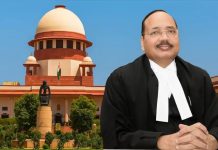
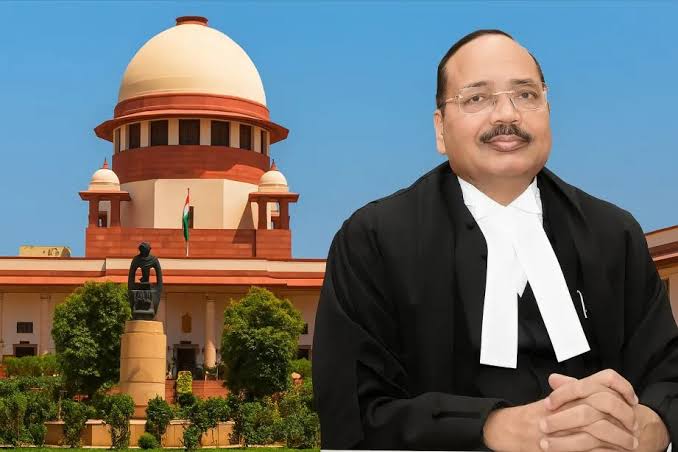
Many degree holders and highly educated citizens of India (male/female) in various subjects, elected representatives in power, officers-employees of all departments within the country, judges — when they are not seen fulfilling their duties without any kind of discrimination, with equality and pure character, for the benefit of their own society and other societies, for security, for progress, for improving educational standards, for eradicating caste discrimination, for establishing the justice system in every society, for giving every citizen of every social group their rights according to the Indian Constitution — then what is the use of their education and position? This question is directed to Chief Justice of India Suryakant Sharma.
If the Chief Justice of the country defines humanity and humaneness by placing religion, caste, gender, discrimination, and knowledge in front, then it should be noted that he falls short in defining proper knowledge and the proper use of knowledge.
Chief Justice of India Suryakant Sharma has read the Indian Constitution. Then? Under Article 19 of the Indian Constitution, Dr. Babasaheb Ambedkar, through the Indian Constitution, has given the right to speak, write, and struggle for rights to laborers, farmers, unemployed, victims, exploited, oppressed, rights-deprived and suppressed, broken citizens of India (male/female) and all other Indian citizens (male/female) — and in this, no condition of education has been imposed at all.
Then why was the condition of education not imposed in the Indian Constitution for writing and expressing oneself? — this the Chief Justice of the country should first fully understand.
People in villages and towns are less educated, but that does not mean they do not have knowledge or experience. In their own way, they do have knowledge and experience, and they also have excellent information about living within labor. Likewise, they also have the understanding of how to handle situations.
If the highly educated people, elected representatives, officers, employees, judges, lawyers, and important persons of other fields in India are not working, not struggling for the rights of citizens of India, for their overall progress, for the eradication of caste discrimination within India, for improving the educational standards of the country, for providing employment to laborers and the unemployed, for the benefit of farmers, for struggling against injustice and atrocities without looking at caste and religion — then what is the use of their higher education? — this question is also directed to the Chief Justice of India.
Saint Kabir…..
(1398–1518) was a great Indian saint, poet, and social reformer of the 15th century. His thoughts giving the message of humanity are still guiding today.
He strongly opposed rituals such as idol worship, pilgrimage, and external show. Without advocating any one religion, he considered the religion of humanity as the supreme religion.
Saint Kabir was not literate in literature, yet he composed abundant poetry in oral form. His disciples have compiled his teachings in various texts. Bijak is Kabir’s most prominent and famous text.
Saint Namdev…..
(1270 AD – 1350 AD) was a great saint, poet, and pioneer kirtan performer of the Warkari sect. He composed abundant abhangas in Marathi and Hindi languages. His compositions are also included in the Sikhs’ holy scripture ‘Guru Granth Sahib’.
Saint Namdev is considered the pioneer biographer and kirtan performer in Marathi. Not remaining limited to Maharashtra for national integration and Hindi literature, Saint Namdev traveled to North India and spread the Bhagavat religion (devotion to Vitthal). He composed many padas in the Hindi language. A total of 61 padas of Saint Namdev are included in the Sikh holy scripture ‘Guru Granth Sahib’, which are known as ‘Namdevji ke Pad’.
Jagadguru Sant Tukaram Maharaj…..
(1608–1650) was a great Warkari saint, poet, and social reformer of the 17th century in Maharashtra. He spread devotion through his abhanga compositions and strongly attacked the evil customs and traditions in the then social system, giving the message of social equality.
Sant Tukaram Maharaj was born in 1608 AD in the village ‘Dehu’ in Pune district. His full name was Tukaram Bolhoba More. His father was Vitthalipant and mother was Rukminibai.
Sant Tukaram Maharaj wrote thousands of ‘abhangas’ in the Marathi language. His abhanga collection is still considered the foundation of Maharashtra’s culture. His abhanga writing was opposed by the then orthodox society and his abhanga notebooks were drowned in the Indrayani river.
He opposed the caste system and put forward the thought that ‘forgetting discrimination, everyone should come together.’ He criticized hypocrisy, superstitions, and external practices in society in very straightforward words through his abhangas.
His sayings “Jhali Namaachi Soy, Pavale Abhay” and “Vrikshavalli Amha Soyare” are still guiding human life in the right direction.
Sant Gadge Maharaj…..
(23 February 1876 – 20 December 1956) was a great saint, kirtan performer, and social reformer of Maharashtra.
Gadge Maharaj, who gave the ‘message of cleanliness,’ had dedicated his entire life to the service of the poor, weak, orphaned, and neglected. “There is no knowledge without cleanliness” was his motto.
He fought throughout his life against caste discrimination, superstitions, customs-traditions, and animal sacrifice.
“Tirthi Dhondapani Dev Rokda Sajjani” (The true God is in human beings) was his teaching.
Through kirtans, he used to convince people of the importance of not having addictions, not taking loans, and the importance of education. At the end of the kirtan, he would enlighten people by asking them questions, and from the collected money, he built schools, dharamshalas, and orphanages for the poor.
He started dharamshalas and ashrams at many places for poor and orphaned people. To honor his work, the Maharashtra government runs the ‘Sant Gadge Baba Gram Swachhata Abhiyan’, and the university in Amravati has been named ‘Sant Gadge Baba Amravati University’.
Rashtrasant Tukdoji Maharaj……
(30 April 1909 – 11 October 1968) was a great modern saint, poet, social reformer, and freedom fighter of Maharashtra.
He created public awareness throughout his life through khanjiri bhajans for the eradication of superstitions and caste discrimination as well as for village development.
Due to his active participation in the freedom movement, he was also imprisoned in 1942.
Impressed by his patriotism and social work, India’s first President Dr. Rajendra Prasad gave him the title of ‘Rashtrasant’.
In 1955, he represented India at the ‘World Religion and World Peace Conference’ held in Japan.
‘Gramgeeta’, his famous text that laid the foundation of village development and gave the message of ‘Gramoddhar’, is still read with great respect in rural areas. Apart from this, he composed many texts like ‘Anandamrit’, ‘Bhavabodhan’ and patriotic bhajans.
Literary Emperor Annabhau Sathe…..
In Marathi literature, the title ‘Sahitya Samrat’ (or Literary Emperor) has primarily been given to Lokshahir Annabhau Sathe.
He has received this honor due to the many novels including Fakira, stories, powadas, and folk dramas written by him.
Duty and Work….
The uneducated and very less-educated saints of India have done great work of social reform through their vast thoughts (knowledge). Along with this, Annabhau Sathe has become a literary emperor.
This means that degrees are not at all necessary for knowledge and for doing work in public interest — for struggling with their interests — this the Chief Justice of India should understand.
For serving people in their own language as well as for excellent writing, fundamentally within equality, a pure mind, proper hatred-free thoughts, wisdom, integrity to struggle, and the skill to handle situations are needed. For this, education of big degrees is not required.
If people who take education of big degrees are not coming forward to destroy caste discrimination and inequality in India, then what is the use of their education?